

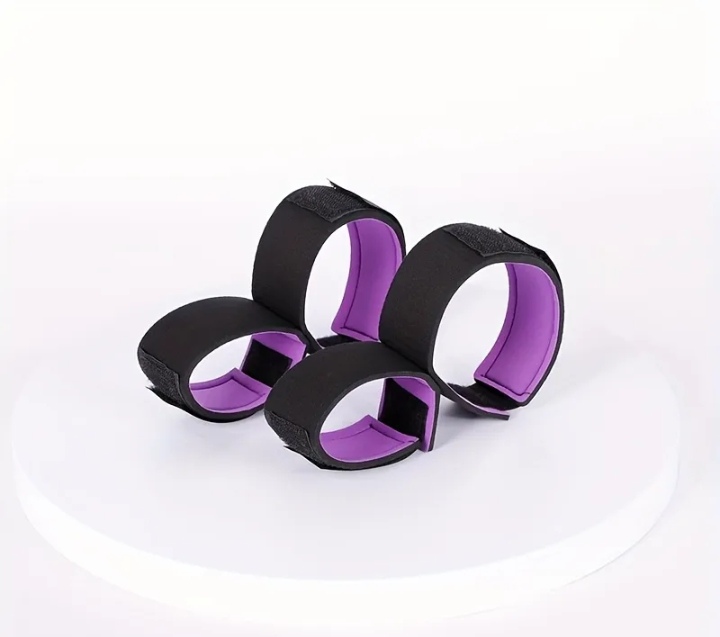
| Size | Adjustable straps |
|---|
3 in stock (can be backordered)
Using leg and wrist restraints in a consensual adult context is commonly associated with BDSM and bondage play. When practiced safely and with clear consent, some people report the following benefits:
Restricting movement can:
Increase physical sensitivity (because the restrained person can’t shift or brace)
Heighten anticipation, making touch feel more intense
Create stronger focus on specific sensations
Anticipation and lack of control often amplify arousal for some individuals.
For many people, the appeal is psychological rather than purely physical:
Feeling vulnerable (for the restrained partner)
Feeling in control (for the restraining partner)
Exploring power dynamics in a consensual way
This dynamic can deepen erotic intensity when both partners are comfortable with it.
Healthy bondage requires:
Clear communication
Mutual agreement
Respect for boundaries
When done responsibly, it can strengthen trust because one partner is physically placing themselves in a vulnerable position.
Restraints can help:
Reinforce dominant/submissive roles
Support fantasy scenarios
Make roleplay feel more immersive
The restrained partner may feel:
Less pressure to “perform”
More freedom to focus on receiving sensation
Permission to surrender control in a safe environment
If exploring restraints, safety is critical:
Discuss boundaries beforehand.
Agree on what is and isn’t okay.
Use a safe word (and a nonverbal signal if gagging is involved).
Avoid tying restraints too tightly.
Never place pressure on the neck.
Avoid compressing joints or nerves (e.g., inside of wrists).
Check regularly for numbness, tingling, or color changes.
Keep safety scissors nearby if using rope.
Avoid leaving a restrained person unattended.
Bondage can create an emotional drop afterward. Aftercare may include:
Reassurance
Physical comfort (blankets, cuddling)
Talking about the experience
If you’re just starting out with BDSM and want to explore restraint safely, it’s best to start with beginner-friendly, low-risk options that are easy to use, comfortable, and easy to release in an emergency. Here’s a guide broken down by type:
Velcro cuffs – Often made of soft fabric with Velcro closures. Comfortable, adjustable, and easy to release quickly. Great for wrists and ankles.
Fleece or padded cuffs – Gentle on the skin and safer for longer sessions.
Bondage tape – Sticks to itself, not skin or hair, so it’s less likely to cause pain or injury.
Tip: Make sure you can slip a finger between the cuff and skin—this helps prevent circulation problems.
Soft cotton or silk rope – Avoid rough or synthetic ropes that can cause rope burns.
Simple ties – Focus on basic knots like a “single column tie” around wrists or ankles. Don’t attempt advanced shibari until you’re experienced.
Tip: Always have safety scissors or a quick-release tool nearby. Never leave someone tied up alone.
Scarves, ties, or belts – Soft and accessible, good for light restraint play.
Sheets or fabric strips – Can be tied in simple loops around wrists, ankles, or a bedpost.
Tip: Avoid anything too thin that can cut into skin.
Under-bed restraints – Straps that fit under the mattress, allowing for safe wrist or ankle restraint.
Adjustable wrist/ankle straps – Often padded and easy to attach to doors, beds, or chairs.
Safe word or signal – Always agree on a word (or non-verbal signal if gagged) to stop immediately.
Check circulation – Look for numbness, tingling, or color change in the skin.
Time limits – Especially with beginners, keep sessions short and check in frequently
When it comes to BDSM, safety isn’t just important—it’s essential. Many “mistakes” happen simply because people focus on the scene or the thrill, and overlook the physical, emotional, and psychological risks. Here’s a thorough list of common safety mistakes to avoid:
Not discussing limits, boundaries, and hard/soft limits beforehand.
Failing to agree on a safe word or signal—especially if gagged or in sensory play.
Assuming partners know your triggers—never guess, always communicate.
Performing acts without explicit, enthusiastic, and ongoing consent.
Pushing someone beyond their limits for “fun” or “experience.”
Forgetting that consent can be withdrawn at any time.
Using ropes or restraints without knowledge of circulation and nerve safety.
Tying too tightly around wrists, arms, legs, or neck—risking nerve damage or loss of blood flow.
Leaving someone tied up unsupervised.
Tip: Learn proper knots and positions. Avoid suspension unless trained.
Doing breath control, choking, or smothering without training or supervision.
Ignoring the signs of oxygen deprivation.
Not having immediate release methods ready.
Using items not designed for BDSM (e.g., household ropes, belts, or kitchen tools).
Reusing toys without proper cleaning or sterilization, risking infection.
Using electrical play devices incorrectly—risk of burns or electric shock.
Skipping emotional support or physical care after intense scenes.
Not monitoring for bruises, cuts, or mental distress.
Assuming aftercare is optional; it’s crucial for trust and safety.
Sharing toys without proper cleaning.
Not using barriers (condoms, dental dams) during sexual play.
Ignoring pre-existing health conditions that could make certain play dangerous.
Pushing limits without proper gradual training or experience.
Doing intense scenes when fatigued, drunk, or under the influence.
Ignoring physical warning signs (pain, numbness, dizziness).
Learning only from media, pornography, or online forums—these often gloss over safety.
Failing to practice techniques in a safe environment first.
Not seeking guidance from experienced or knowledgeable practitioners.
Not keeping safety scissors or cutting tools nearby for rope/straps.
Failing to know CPR or first aid basics.
Not having a plan for medical emergencies if something goes wrong.